Seb from year one writes: I found a record of Addison and Steele's 'The Spectator' magazine, which is here on this site, with a biography on the men themselves and then volumes 1-3, although I've only touched on volume 1.
Whether these texts are reliable or not is up for the reader to decide, but I believe the provision of these records to be intriguing enough to warrant eager reading nonetheless. Here's the link to the site: http://www.gutenberg.org/catalog/world/readfile?fk_files=18311&pageno=1 - I've set the link to the first page of volume 1 of The Spectator.
You may well have already discovered this website, but I thought I'd spread the word all the same.
PS: I'm sure you can find almost anything text-related on this site, just use the author and title word search bars on the side. I've just located Thomas Hobbes' 'The Leviathan' (http://www.gutenberg.org/catalog/world/readfile?fk_files=1319137&pageno=7), and it's fascinating. However, the phrase 'take from this what you will' is very apt when reading such voluminous works, as is a nice cold pint.
CHRIS HORRIE ADDS: Excellent work Seb. For the seminar stick to working mainly with the text. You need an entire year to do all the contextual stuff. The contrast of (English and French) decadence and conservatism versus (American) puritanism and liberalism is one theme we could profitably explore - but this material is so rich that there are a 100 themes that could be examined - all of them valid, and all good for giving the grey matter a good work out which is the whole and only point of HCJ.
I remembered Peter Greenaway's film The Draftsman's Contract which is based on some of the essays of Addison and Steele. It was made in the 1980s and it contains all sorts of connections with the neoconservatism of the 1980s - eg in some clips the characters use cordless telephones when they are setting up all manner of financial scams (such as the famous Tulip investment bubble) which has all these parallels with the asset inflation, stock market boom of the 1980s (and again recently). Some thing never changes. In fact - in human affairs - nothing ever changes (discuss!).
ALSO - Hogarth's puritanism and moralising...
HENRY FIELDING'S LONDON:
JOHN GAY - THE BEGGAR'S OPERA
PURITANS IN AMERICA:
As I say we could spend all year profitably studying this fascinating period, but for our purposes we are taking it as the context from which the specific identifiable activity of journalism arose. Naturally as journalists we want a bit of a picture of the world we are living in and where it sort of came from.
Saturday, 31 October 2009

Friday, 30 October 2009
Year Three - Innocence Project conference
SESSION TIMETABLE (Please note that overall timings are confirmed, but there may be minor changes to session timings and speakers)
Friday 30th October – The Innocence Network UK: Scope and Remit, and
“Victims’ Voices”, chaired by Bruce Kent
1800-1830 Registration
1830-1845 Chair’s welcome and the broader remit of innocence project work: Dr Michael Naughton
1845-1940 Session 1: The difficulties that prisoners maintaining innocence face in making progress through the prison system and achieving their release: led by Tony McGregor (NOMS) & Terry McCarthy (Parole Board)
1940-2000 Session 2: Victims’ Voices I: Gerry Conlon (1)
2000-2020 Paul Blackburn (2)
2020-2040 Q & A with the evening’s speakers
2040-2115 Drinks Reception, and informal “Meet the Speakers”
Saturday 31st October – Case Work: What To Do and How To Do It (chaired by Dr Paul Mason)
0900-0930 Registration
0930-1100 Session 3: What’s in the Box? File Handling and Case Review (workshops, followed by review)
1100-1115 Coffee
1115-1245 Session 4: The Evidence: What to Look For (workshops, followed by review)
1245-1330 Lunch
1330-1500 Session 5: Getting Advice: Supervising Lawyers and Forensic Science Experts (workshop, followed by review by Philip Evans, INUK national legal advisor; Nigel Hodge, forensic scientist)
1500-1515 Coffee
1515-1545 Session 6: Electronic Case Management: an Introduction to Casemap (Dr Paul Mason)
1545-1645 Session 7: Fieldwork in the USA: Kate Hill Germond, Associate Director, Investigator & Advocate, Centurion Ministries (chaired by Dr Michael Naughton)
1645-1715 Session 8: Feedback and Discussion
1715 END
Friday 30th October – The Innocence Network UK: Scope and Remit, and
“Victims’ Voices”, chaired by Bruce Kent
1800-1830 Registration
1830-1845 Chair’s welcome and the broader remit of innocence project work: Dr Michael Naughton
1845-1940 Session 1: The difficulties that prisoners maintaining innocence face in making progress through the prison system and achieving their release: led by Tony McGregor (NOMS) & Terry McCarthy (Parole Board)
1940-2000 Session 2: Victims’ Voices I: Gerry Conlon (1)
2000-2020 Paul Blackburn (2)
2020-2040 Q & A with the evening’s speakers
2040-2115 Drinks Reception, and informal “Meet the Speakers”
Saturday 31st October – Case Work: What To Do and How To Do It (chaired by Dr Paul Mason)
0900-0930 Registration
0930-1100 Session 3: What’s in the Box? File Handling and Case Review (workshops, followed by review)
1100-1115 Coffee
1115-1245 Session 4: The Evidence: What to Look For (workshops, followed by review)
1245-1330 Lunch
1330-1500 Session 5: Getting Advice: Supervising Lawyers and Forensic Science Experts (workshop, followed by review by Philip Evans, INUK national legal advisor; Nigel Hodge, forensic scientist)
1500-1515 Coffee
1515-1545 Session 6: Electronic Case Management: an Introduction to Casemap (Dr Paul Mason)
1545-1645 Session 7: Fieldwork in the USA: Kate Hill Germond, Associate Director, Investigator & Advocate, Centurion Ministries (chaired by Dr Michael Naughton)
1645-1715 Session 8: Feedback and Discussion
1715 END
Wednesday, 28 October 2009
job roles
EXECUTIVE GROUP (6)
Editor - STAFF ON DUTY
Managing Editor – Ben King
Production Editor – Rich Taylor
News Editor – James Kenyon
Sports Editor – Mark Lovell
Features Editor – Alice Rimes
PRODUCTION TEAM (6)
[Production Editor]
Sub-editors / A/V producers and legal readers:
Mon/Tue: Chanin Lloyd, Matt Clifford, Cara Wilson,
Tue/Wed: Tom Miller, Emma Jackson, Liban Warsame, Leanne Townsend.
NEWS TEAM (6)
[News Editor – James Kenyon]
Deputy News Editor (planning) Colin Jeffrey
Beat Reporters -
University (Corporate): Shira Pinczuk
Students / Students Union: Stuart Appleby
Winchester/Hants Council/Community: Veronika Frydel
Crime: Robert Anderson
Investigations: Madelene Osterblad
Entertainment news: Kayleigh James
Chief Reporter/ Breaking News: Maxine Erasmus
SPORTS TEAM
[Sports Editor – Mark Lovell]
Deputy Sports Editor (planning) James Frazer
Sports Reporters: Arnold Moyo, Tom Obstreski
Sports Feature Writer - Grant Payne
FEATURES TEAM
[Features Editor – Alice Rimes]
Listings Editor – Glenn Hutt
Commissioning Editor: Reviews/Previews – John Hopley
Commissioning Editor: Reader Response/ UGC Editor - Paul Carrett
Commissioning Editor: Consumer – Jason Curtis
Commissioning Editor: People/Celebrity – Lucy Pilgrim
Commissioning Editor: Fashion/Lifestyle (women) – Catherine Hayes
Commissioning Editor: Fashion/Lifestyle (men) - Omar Musa
Commissioning Editor: Health and well being - Aimee Castles-Greene
Commissioning Editor: Comment and Analysis - Thomas Hobbs
Commissioning Editor: Media - Josh Duffy
Commissioning Editor: Technology – Joe Lipscombe
Editor - STAFF ON DUTY
Managing Editor – Ben King
Production Editor – Rich Taylor
News Editor – James Kenyon
Sports Editor – Mark Lovell
Features Editor – Alice Rimes
PRODUCTION TEAM (6)
[Production Editor]
Sub-editors / A/V producers and legal readers:
Mon/Tue: Chanin Lloyd, Matt Clifford, Cara Wilson,
Tue/Wed: Tom Miller, Emma Jackson, Liban Warsame, Leanne Townsend.
NEWS TEAM (6)
[News Editor – James Kenyon]
Deputy News Editor (planning) Colin Jeffrey
Beat Reporters -
University (Corporate): Shira Pinczuk
Students / Students Union: Stuart Appleby
Winchester/Hants Council/Community: Veronika Frydel
Crime: Robert Anderson
Investigations: Madelene Osterblad
Entertainment news: Kayleigh James
Chief Reporter/ Breaking News: Maxine Erasmus
SPORTS TEAM
[Sports Editor – Mark Lovell]
Deputy Sports Editor (planning) James Frazer
Sports Reporters: Arnold Moyo, Tom Obstreski
Sports Feature Writer - Grant Payne
FEATURES TEAM
[Features Editor – Alice Rimes]
Listings Editor – Glenn Hutt
Commissioning Editor: Reviews/Previews – John Hopley
Commissioning Editor: Reader Response/ UGC Editor - Paul Carrett
Commissioning Editor: Consumer – Jason Curtis
Commissioning Editor: People/Celebrity – Lucy Pilgrim
Commissioning Editor: Fashion/Lifestyle (women) – Catherine Hayes
Commissioning Editor: Fashion/Lifestyle (men) - Omar Musa
Commissioning Editor: Health and well being - Aimee Castles-Greene
Commissioning Editor: Comment and Analysis - Thomas Hobbs
Commissioning Editor: Media - Josh Duffy
Commissioning Editor: Technology – Joe Lipscombe
Monday, 26 October 2009
Year One - Another Joseph Addison essay
I've uploaded another Joseph Addison essay - THE ROYAL EXCHANGE (part1)(part2)(part3) - for the lecture Tuesday about early journalism. You should read this along with the other essays, previously notified via the page on the HCJ1 section of the course site - THE ADVENTURES OF A SHILLING being the most straightforward. The theme - as I will discuss in the lecture - is the link between early journalism with trade and the Coffee Houses and Chocolate Drinking Clubs (such as Dryden's Kit Kat club; and the Hell Fire Club) and between wit (think of Blackadder III) conservative Whig politics (pace: John Locke) and the political reaction against the Puritanism of Cromwell the New Model Army, and The Commonwealth (republic). Although we will restrict the seminar discussion to Addison, it is ways in the same context thinking about Daniel Defoe (eg Moll Flanders), sometimes described as the father of English journalism, as well the father of the novel. Then - while I remember it - there's the magnificent pastiche of Joseph Addison's writing style (peerless I should say) in The Draftsman's Contract.Also - The Leveller mutiny, Winstanley and the diggers.


Sunday, 25 October 2009
Ian Anderson
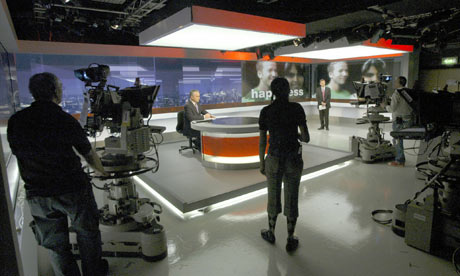
Ian Anderson (recently the editor of the BBC 10 O'Clock News - left) confirmed he will be in the college tomorrow (for much of the day) and that he will be the guest editor of WINOL in a few weeks time. He will doing the the crit on some year three practice packages in the morning from 10am onwards, and then giving a talk about his career and generally the direction being taken by journalism. This is mainly for three (in the morning); but if members year one or two want to come down to the newsroom (and are not busy with their own projects) that could be OK. It is worth meeting such a senior journalist if you can - but he will be back later in the term (and in subsequent years I think).
Ian will be there at about 10am - but please arrive before that (years 2 and 3) and read the papers and blog. Ian Anderson by the way is blog gold and if I were you I would think about trying to video him and putting a video clip up on your blog somehow.
Saturday, 24 October 2009
Tuesday football confirmed - Tues 12am - 1pm free
We've confirmed the booking for staff-student football on Tuesdays 12-1. It is free, there are showers and they are hot. RESULTS SO FAR: Year One 0 v Year Three 1 (aet)(week 3); Year Two 6 v Year Three 0 (that was roughly the difference, after losing count) (week 4).
Match Report (week 3 and 4 - Year Three vs Year One/ Year Two vs Year Three)
They swaggered. They strutted. They preened. But the all-conquering heroes of Year Three ended up eating a jumbo sized slice of humble pie, garnished with a side dish of deep fried hubris and washed down with a mighty tankard of foaming disappointment writes Alan Partridge.
Only seven short days before Year Three had snatched victory with a last minute tie-breaker to overcome a plucky and talented yet chaotic and essentially clueless year one side.
The year three combo of Ben, Matt and Mark had functioned like a well oiled military unit, oozing sophistication and slick interplay and releasing a blitzkrieg of attacking play. The year ones, led from the front by Gareth and his silky skills and Jake, a man reminiscent of the England totem Nobby Stiles in the degree of his grip on the throat of the midfield fulcrum. They were hampered by Chris who played in midfield; but enlivened by man of the match Liverpool Grant, who put in a performance so magnificent that it made you wonder what would happen if he ever tried to play standing up. (Year 1 were later deducted 10,000 points because Grant is a year 2).
A week later there was no love lost in the WINOL derby - year 3 vs year 2. The gym was like a seething cauldron as a capacity crowd of three (the gym bloke; some guy waiting to play badminton and a stray student taking photos for blackmail purposes) munched on their metaphorical prawn sandwiches and vaguely sneered at the proceeding set out before them.
The thirds made the early running in a tight game, again looking very well oiled. The turning point came when lensman and supertutor Karin turned up to add his individual skills to the year three effort. Those skills are like vintage champagne. Unfortunately champagne and engine oil do not mix. And the result was very much like pouring fizzy plonk into the petrol tank of a Lambreta. Things began to splutter.
Soon the year twos got on top, despite their own 15 stone handicap in the form of pie-munching midfield mastermind Chris. The twos ran out easy winners in the end. It was Liquid Football played by men with feet like traction engines.
Man of the match: Grant
Match Report (week 3 and 4 - Year Three vs Year One/ Year Two vs Year Three)
They swaggered. They strutted. They preened. But the all-conquering heroes of Year Three ended up eating a jumbo sized slice of humble pie, garnished with a side dish of deep fried hubris and washed down with a mighty tankard of foaming disappointment writes Alan Partridge.
Only seven short days before Year Three had snatched victory with a last minute tie-breaker to overcome a plucky and talented yet chaotic and essentially clueless year one side.
The year three combo of Ben, Matt and Mark had functioned like a well oiled military unit, oozing sophistication and slick interplay and releasing a blitzkrieg of attacking play. The year ones, led from the front by Gareth and his silky skills and Jake, a man reminiscent of the England totem Nobby Stiles in the degree of his grip on the throat of the midfield fulcrum. They were hampered by Chris who played in midfield; but enlivened by man of the match Liverpool Grant, who put in a performance so magnificent that it made you wonder what would happen if he ever tried to play standing up. (Year 1 were later deducted 10,000 points because Grant is a year 2).
A week later there was no love lost in the WINOL derby - year 3 vs year 2. The gym was like a seething cauldron as a capacity crowd of three (the gym bloke; some guy waiting to play badminton and a stray student taking photos for blackmail purposes) munched on their metaphorical prawn sandwiches and vaguely sneered at the proceeding set out before them.
The thirds made the early running in a tight game, again looking very well oiled. The turning point came when lensman and supertutor Karin turned up to add his individual skills to the year three effort. Those skills are like vintage champagne. Unfortunately champagne and engine oil do not mix. And the result was very much like pouring fizzy plonk into the petrol tank of a Lambreta. Things began to splutter.
Soon the year twos got on top, despite their own 15 stone handicap in the form of pie-munching midfield mastermind Chris. The twos ran out easy winners in the end. It was Liquid Football played by men with feet like traction engines.
Man of the match: Grant
Friday, 23 October 2009
ENPS - a bit of boasting

Just to emphasise the importance of ENPS. Brian and I have campaigned for the installation of this system since we arrived, and it has cost a lot of money and endless management meetings to get it. Most journalism colleges in the UK use ordinary computer programmes to produce news. A few leading colleges - an elite within an elite if you will - use ENPS - The Essential News Production System. The point is that ENPS is EXACTLY the same system as used by the BBC and - for example - Channel Four news here in the UK, and also by CNN and CBS news in the USA.
ENPS is the world class Rolls Royce international gold standard for newsroom production training. If you put on your CV that you were trained in news production on ENPS the status impact of that I would say is equivalent to saying you have 100+ wpm shorthand. The difference is with ENPS is that all you have to do really is turn it on. Better yet we have News City an ENPS-like news simulator. We are the only college in the UK to have News City except for the BBC College of Journalism (the corporation's internal training department).
Year one students will have the advantage of training on ENPS more or less from the start of their 'off line' news training course this semester. Year three and two will use the system on WINOL, where it will be integrated with the Joomla Content Management System (training in operating Joomla will be given next week; and ENPS will be back-filled later).
The University has been absolutely brilliant in backing us in setting this up, but it is new territory for the university and really for any university in the UK. So bare with us and be supportive over the next couple of weeks as we crank up ENPS, Joomla, the Studio, the radio station, News City, the Journalism Now site and continued development to the coursesite and the blogs... It is all coming together and after the preparatory phase of these first four or five weeks, we are ready to move into the second phase of the semester (first years moving on to starting actual news after various preparatory activities; second and thirds ready to launch WINOL). There will be problems because we are entering uncharted territory. It could be fantastic. Or it could be a terrible flop. We shall see.
Wednesday, 21 October 2009
HCJ Year Two
Link here to some notes and some weblinks for the HCJ Year Two session today (Thursday). I will talk through the clips in the lecture. It is about Freudianism.
ENPS
It's taken longer than we'd hoped - but ENPS is almost up and running.
For those of you who have never heard of ENPS, it's the key program used by the BBC to produce its internet, radio and TV output.
The technicians are currently installing the ENPS computers in TAB 9 - which is fantastic - but unfortunately it means that TAB 9 will be out of bounds until after lunch on Thursday.
News package for next week
Brian writes: Year Two and Year Three students will need to produce a 1'30" (90 second) package for next week. It should be filmed, edited on Final Cut Pro and saved back onto DV tape. The package should contain at least two interviewees, a PTC and GVs - and should be put together in the same format as you see every evening in regional TV news programmes.
Third Years - packages will be screened on Monday - with Ian Anderson and Chris Horrie on hand to give you some tips.
Second Years - packages will be screened on Tuesday - with Tom Hepworth and Brian Thornton giving feedback.
The choice of topic is entirely your own - but the point at this stage is more on displaying your ability to produce broadcast quality material, rather than prize-winning journalism.
You can work in groups of two or three.
Tuesday, 20 October 2009
Innocence Project
Brian writes: Great news - the University has agreed to fund the Innocence Project training for the third years in London. We can discuss the details tomorrow (Wednesday) - but check out this link for more information about the training - http://www.innocencenetwork.org.uk/events.htm
Monday, 19 October 2009
Year One - room change
The law session will take place tomorrow in FWB103 (Fred Wheeler Building) and not in MMC. We will be in FWB103 for this week, and the following week and then we shall return to the MMC.
WEDNESDAY 21ST
Just to remind year threes that despite all the other changes, you still need to pick a TV package to deconstruct for this Wednesday. Analyse in detail, its strengths, weaknesses, use of pictures, voice-over etc and be prepared to present your findings to the group. We'll be in a new venue remember - Stripe Studio 2 from 10:00. See you there.
Final Cut Pro notes and crib sheet
These are note by Chris Horrie of a year three training tutorial with Corin. It is about how to use Final Cut Pro (FCP) to edit film into a package.
1. load FCP
2. Check the audio and video settings. Set audio to default. Set the audio and video setting FINAL CUT PRO > AUDIO VIDEO SETTINGS - brings a dialogue box with lots of scary stuff. Set for DV PAL 48 kHZ (next line the same)
Device Control Pre-set - Firewire Pal
On AV devices tab set to 'default' (this is the easiest way).
Then press save (shortcut is apple S). By saving you will create a project folder (name it something other than untitled).
3. Create a scratch disk. System Settings> (option says set and prompts you to give a location - this should be where the project file is).
4. Now we need to make/get some clips which we will use to make the film.
Put your tape into the tape deck. (You need a Mac connected to a tape deck. There are two machines like this in the TAB9 newsroom, one on the sportsdesk, one on production.
Capture the video using the commands File>Log and Capture
That will automatically detect the film in the tape deck. Press play and run it in real time in a window. You will see what you have filmed.
You have three options when you are creating the clips from which you will construct your package.
1. Capture Now - it will capture stuff as you watch it -
2. Capture Clip - this can capture part of the video automatically between two times that you noted when filming.
3. Batch Capture - you can set many in and out times and it will capture each as a separate film and it will make a list of these. Advice is not to use batch capture if you are a beginner. It is very useful and will speed you up when you are confident.
The clip will automatically accumulate into the Library. They will appear in the library on the left hand side of the screen. Name the clips in the description bar before capturing them
Now we have our clips.
Drag clips from source window or the library into the time line. Use in and out points to trim the clips. Shortcut is I and O.
WORKING ON THE CLIPS
You can de-link sound and video. Link selection and shift L. This allows you to keep the soundtrack (eg of an interview) running underneath a still picture or a graphic or a 'cut-away' piece of filming. You can turn the sound on and off on each clip or adjust the sound.
this will globally de-link the sound and vision, but there is a way of doing it for each clip.
THE RAZOR TOOL - press 'B' and this will turn it on.
The razor tool is for adding transition effects - eg a fade from one sequence into another.
Transitions are found in the effects window in the browser. You need to create a gap in the video time line so that transitions have time to work.
(It is best to render as you go along - rendering is reversible. It is the process that 'prints' the transition. You have to render transitions. The command is in the tool bar).
[Select default video settings for the video playback).
You can control and adjust the sound level in each clip and globally. There are advanced controls which allow you to automate the balancing of sound levels. Not for beginners.
Effects on the clips - click on the clip to load it into the viewer - in the motion tab you can control the size and shape of the clip - you can do slo mo (doesn't work too well - but speeding up does work). Slo mo and speeding is time re-mapping. It will keep the length of the clip the same, but speed up the action or slow it down.
All additional effects can be found in the effects tab in the top left of the screen.
Careful - once you do these effects it will take time to reverse them.
If you are speeding up a clip you will need to d-link the sound. Speeded up sound / slowed down sounds terrible. You will then have to re-edit the sequence to run the sound under the altered video.
Effects window has controls for compression and sound standardisation. Corin and Don Hendy are going to think about standardisation for compression. Don't worry about that right now.
When you are finished the film will need to be rendered. But it is best to render as you go along, eg after each time you crate a transition (effect) from one clip to another. The shortcut for rendering is apple R.
Please add comments on this blog adding detail and tips to these rudimentary notes.
Questions: Corin's email: corin.pritchard@winchester.ac.uk
Also - a video tutorial on capturing. You can find other tutorials on editing, and on special effects.
1. load FCP
2. Check the audio and video settings. Set audio to default. Set the audio and video setting FINAL CUT PRO > AUDIO VIDEO SETTINGS - brings a dialogue box with lots of scary stuff. Set for DV PAL 48 kHZ (next line the same)
Device Control Pre-set - Firewire Pal
On AV devices tab set to 'default' (this is the easiest way).
Then press save (shortcut is apple S). By saving you will create a project folder (name it something other than untitled).
3. Create a scratch disk. System Settings> (option says set and prompts you to give a location - this should be where the project file is).
4. Now we need to make/get some clips which we will use to make the film.
Put your tape into the tape deck. (You need a Mac connected to a tape deck. There are two machines like this in the TAB9 newsroom, one on the sportsdesk, one on production.
Capture the video using the commands File>Log and Capture
That will automatically detect the film in the tape deck. Press play and run it in real time in a window. You will see what you have filmed.
You have three options when you are creating the clips from which you will construct your package.
1. Capture Now - it will capture stuff as you watch it -
2. Capture Clip - this can capture part of the video automatically between two times that you noted when filming.
3. Batch Capture - you can set many in and out times and it will capture each as a separate film and it will make a list of these. Advice is not to use batch capture if you are a beginner. It is very useful and will speed you up when you are confident.
The clip will automatically accumulate into the Library. They will appear in the library on the left hand side of the screen. Name the clips in the description bar before capturing them
Now we have our clips.
Drag clips from source window or the library into the time line. Use in and out points to trim the clips. Shortcut is I and O.
WORKING ON THE CLIPS
You can de-link sound and video. Link selection and shift L. This allows you to keep the soundtrack (eg of an interview) running underneath a still picture or a graphic or a 'cut-away' piece of filming. You can turn the sound on and off on each clip or adjust the sound.
this will globally de-link the sound and vision, but there is a way of doing it for each clip.
THE RAZOR TOOL - press 'B' and this will turn it on.
The razor tool is for adding transition effects - eg a fade from one sequence into another.
Transitions are found in the effects window in the browser. You need to create a gap in the video time line so that transitions have time to work.
(It is best to render as you go along - rendering is reversible. It is the process that 'prints' the transition. You have to render transitions. The command is in the tool bar).
[Select default video settings for the video playback).
You can control and adjust the sound level in each clip and globally. There are advanced controls which allow you to automate the balancing of sound levels. Not for beginners.
Effects on the clips - click on the clip to load it into the viewer - in the motion tab you can control the size and shape of the clip - you can do slo mo (doesn't work too well - but speeding up does work). Slo mo and speeding is time re-mapping. It will keep the length of the clip the same, but speed up the action or slow it down.
All additional effects can be found in the effects tab in the top left of the screen.
Careful - once you do these effects it will take time to reverse them.
If you are speeding up a clip you will need to d-link the sound. Speeded up sound / slowed down sounds terrible. You will then have to re-edit the sequence to run the sound under the altered video.
Effects window has controls for compression and sound standardisation. Corin and Don Hendy are going to think about standardisation for compression. Don't worry about that right now.
When you are finished the film will need to be rendered. But it is best to render as you go along, eg after each time you crate a transition (effect) from one clip to another. The shortcut for rendering is apple R.
Please add comments on this blog adding detail and tips to these rudimentary notes.
Questions: Corin's email: corin.pritchard@winchester.ac.uk
Also - a video tutorial on capturing. You can find other tutorials on editing, and on special effects.
Sunday, 18 October 2009
LIBEL CAMPAIGN
I was reading James Kenyon's excellent blog and saw that he had written about an important libel case involving the leading science journalist Simon Singh. It is well worth reading about this case before the discussion in media law of the important new development of Common Law Qualified Privilege (sometimes also called The Reynolds Defence). There's a campaign to reform the libel laws in the UK which are very favourable to the litigant and mean that journalists don't really stand a chance in a libel case against a wealthy person (or a big company) - unless their publishers are ready to put millions on the table and are prepared to lose that money.
ROBERT FISK
I was reading the second year blogs and there was a debate there between Maddie and Veronika and others about Afghanistan. I directed them to Robert Fisk a journalist who knows all that inside out - he wrote a very great book call The Great War for Civilization.
Fisk is a hero-journalism similar to Harry Evans, because he worked as foreign correspondent for the The Times before RM took it over. After the RM takeover Fisk refused to print a story he believed to be untrue about the shooting down of an Iranian civilian airliner by a US warship (the line was that this was self-defence because it was on a military mission.
Fisk did not believe that and the evidence came out that it was an act of unprovoked aggression or - at best - panic by the US warship). I think I have got that right - please check and post comments.
Fisk resigned over that and went to work instead for the The Independent. There's a lengthy interview here which covers the Iraq War, the Afghan War, the various Lebanese Wars, the Iran-Iraq War, 9/11, Osma Bin Laden. He has interviewed Bin Laden (in Sudan) and basically all the key players.
Fisk is a hero-journalism similar to Harry Evans, because he worked as foreign correspondent for the The Times before RM took it over. After the RM takeover Fisk refused to print a story he believed to be untrue about the shooting down of an Iranian civilian airliner by a US warship (the line was that this was self-defence because it was on a military mission.
Fisk did not believe that and the evidence came out that it was an act of unprovoked aggression or - at best - panic by the US warship). I think I have got that right - please check and post comments.
Fisk resigned over that and went to work instead for the The Independent. There's a lengthy interview here which covers the Iraq War, the Afghan War, the various Lebanese Wars, the Iran-Iraq War, 9/11, Osma Bin Laden. He has interviewed Bin Laden (in Sudan) and basically all the key players.
Year Three: Monday morning 19th October
Year Three - Dave the Final Cut Pro training expert is off sick. Instead Chris Horrie will give his world famous Feature Writing course starting at 10.00. But please arrive at 9.00 and read the newspapers, read and comment on other students blogs, update your blogs and read my notes for the session which are here: Feature Writing. Other activities:
1) Read other students' blogs, including some of the first year blogs and second year blogs - which contain a lot of good stuff. Leave comments on the blogs and invite them to read and comment on your own blogs.
2) Do a brief update on your own blog and link from your blog to the feature writing page containing my notes.
Then we will be ready to go and all warmed up with journo-think ing when I start at 10 for a couple of hours.
1) Read other students' blogs, including some of the first year blogs and second year blogs - which contain a lot of good stuff. Leave comments on the blogs and invite them to read and comment on your own blogs.
2) Do a brief update on your own blog and link from your blog to the feature writing page containing my notes.
Then we will be ready to go and all warmed up with journo-think ing when I start at 10 for a couple of hours.
Friday, 16 October 2009
YEAR TWO: HCJ:
Sigmund Freud and modernism; psychoanalysis and unreliable narrative (eg Ulysses) - sexual repression (and sexual liberation), the sub-conscious and manipulation, sexpol and the over-grown ego - the culture of orally fixated, sexually incontinent consumerist superbabies, etc. Very good series on all this on which I worked as a script consultant on issues around propaganda, mass psychology, Orwell, mind control, tabloids, etc. Happen it is a very good series by Adam Curtis who also did The Power of Nightmares.
"Dreams (and sexual fantasy) are the royal road into the unconscious mind"
WARNING: THE SCREENINGS ASSOCIATED WITH THE LECTURE ON FREUD NEXT WEEK (THURSDAY) WILL INCLUDE LEGAL BUT SEXUALLY EXPLICIT MATERIAL OF AN ADULT NATURE INCLUDING SEXUAL CONTENT OF A POTENTIALLY DISTURBING OR OFFENSIVE NATURE. THE SCREENINGS MAY ALSO INCLUDE STRONG LANGUAGE AND SERIOUS ARTISTIC REPRESENTATIONS OF CHRISTIANITY WHICH MANY MAY FIND TO BE BOTH BLASPHEMOUS AND SHOCKING.
If for religious or moral reasons you do not wish to view material of this type please do not attend the screenings. You will not be assessed on the content of this material and your study of the rest of the course will not be affected in any detrimental way other than by exemption of consideration of this material which which explore important theoretical ideas about of human behaviour, politics and economics in Freudian terms. This material is widely shown on courses dealing with cultural studies and the history of art. It is legal in the UK and the showing of this material is shown within a proper theoretical context as part of a challenging two year course in the history of ideas and culture. Because this is Freud there is - obviously enough - a fair amount of sucking of this and that going on.
ONCE AGAIN - SOME/MOST PEOPLE MAY FIND THIS MATERIAL HIGHLY OFFENSIVE.
"Dreams (and sexual fantasy) are the royal road into the unconscious mind"
WARNING: THE SCREENINGS ASSOCIATED WITH THE LECTURE ON FREUD NEXT WEEK (THURSDAY) WILL INCLUDE LEGAL BUT SEXUALLY EXPLICIT MATERIAL OF AN ADULT NATURE INCLUDING SEXUAL CONTENT OF A POTENTIALLY DISTURBING OR OFFENSIVE NATURE. THE SCREENINGS MAY ALSO INCLUDE STRONG LANGUAGE AND SERIOUS ARTISTIC REPRESENTATIONS OF CHRISTIANITY WHICH MANY MAY FIND TO BE BOTH BLASPHEMOUS AND SHOCKING.
If for religious or moral reasons you do not wish to view material of this type please do not attend the screenings. You will not be assessed on the content of this material and your study of the rest of the course will not be affected in any detrimental way other than by exemption of consideration of this material which which explore important theoretical ideas about of human behaviour, politics and economics in Freudian terms. This material is widely shown on courses dealing with cultural studies and the history of art. It is legal in the UK and the showing of this material is shown within a proper theoretical context as part of a challenging two year course in the history of ideas and culture. Because this is Freud there is - obviously enough - a fair amount of sucking of this and that going on.
ONCE AGAIN - SOME/MOST PEOPLE MAY FIND THIS MATERIAL HIGHLY OFFENSIVE.
YEAR THREE: A possible start in journalism - B2B a great way in to journalism
Tristan Blythe - an ex magazine journalism student taught by Chris Horrie writes, saying he has been promoted to become editor of a trade title just three years after graduating. Tristan writes: Hi Chris - It's been a while since we've been in touch! Can't believe how long ago I left the course!
I am now the editor of a magazine called Private Client Practitioner, the publication for leading private client professionals. Our readership is mainly lawyers, accountants and trust companies. It is the same company as I got my first job at and they have been so pleased with me that in less than three years they gave me one of their titles - which since I took over has launched new initiatives and is now doing better than ever before.
We are currently looking to get some interns to help me out with our plans for next year. We're looking to launch even more new initiatives and features. I was wondering if any of the current cohort of students (or any from last year who might be finding it hard to get a job) would be interested in coming aboard?
Let me know if you could put the word out. We'd need a CV and covering letter to start with.
Chris Horrie notes: The 'Trade Press' or B2B is a good way into journalism, very much replacing or supplementing the traditional route through local papers. The same skills are premium - news reporting, accuracy, knowing the audience, tight unambiguous John Hit Fred writing style and a working knowledge of media law (plus a general excellent academic education in History or what have you). Please send me your CV if you are interested and I will send it on to him with an indication of what you are like - a 'warts and all' reference in other words - and all gloriously protected from my point of view by common law qualified privilege (ie not swtatutory parliamentary priv, or court reporting QP - but ordinary everyday situations, which I will be discussing with year three and year one.
I am now the editor of a magazine called Private Client Practitioner, the publication for leading private client professionals. Our readership is mainly lawyers, accountants and trust companies. It is the same company as I got my first job at and they have been so pleased with me that in less than three years they gave me one of their titles - which since I took over has launched new initiatives and is now doing better than ever before.
We are currently looking to get some interns to help me out with our plans for next year. We're looking to launch even more new initiatives and features. I was wondering if any of the current cohort of students (or any from last year who might be finding it hard to get a job) would be interested in coming aboard?
Let me know if you could put the word out. We'd need a CV and covering letter to start with.
Chris Horrie notes: The 'Trade Press' or B2B is a good way into journalism, very much replacing or supplementing the traditional route through local papers. The same skills are premium - news reporting, accuracy, knowing the audience, tight unambiguous John Hit Fred writing style and a working knowledge of media law (plus a general excellent academic education in History or what have you). Please send me your CV if you are interested and I will send it on to him with an indication of what you are like - a 'warts and all' reference in other words - and all gloriously protected from my point of view by common law qualified privilege (ie not swtatutory parliamentary priv, or court reporting QP - but ordinary everyday situations, which I will be discussing with year three and year one.
Thursday, 15 October 2009
Jack's shorthand videos

Jack Courtez (pictured) has supplied these links for video-based shorthand practice/revision.
http://www.youtube.com/watch?v=-CasO7jeWc8
30wpm
http://www.youtube.com/watch?v=mBRfRRrK6hc&feature=related
20wpm
http://www.youtube.com/watch?v=l6KoaoiSvdo&feature=related
40wpm
Year Three Law - Indentification Libel

Katie Rowles (pictured) from year one has provided this excellent example of the problems around identification in libel. It is exactly the issue we were discussing arising from one of your blogs. It makes all the points and analysing the issues involved would make a very good exam/test question.Winchester Journalism
Wednesday, 14 October 2009
YEAR ONE - 'JOURNALISM NOW' PROJECT
We are now starting the Journalism Now project. This is an attempt to make an online history of journalism. Each student has been assigned a topic to research. Each student will write an initial 500 words on the topic, in so doing each student will come to know that aspect of journalism history in some detail. By using blogs as well as teaching sessions we will as a group gain a cohesive view of the history of journalism in the UK and the USA. Depending on how well the project goes, we can add further sections and topics including for example the magazine industry and new types of interactive online journalism. But to begin with we will use fairly standard academic categories for the study of the history of journalism.
Assessment and method: Students should start by searching the internet and move on to do their own basic bibliographical research (ie obtaining books and following up references to further books). Each topic should include an exhaustive book list and list of internet web links relating to the topic and this should be in addition to the 500 words of body text. Illustrations should be used where possible (but any pictures used must be cleared for copyright). For assessment purposes the 500 words of writing must be 100% accurate in terms of English usage - and this will test the learning in the 'precision English' sessions. The 100 percent requirement applies only to students whose first language is English. Where English is a second language a graded assessment system will be used.
We believe that Journalism Now project will rapidly grow to become a significant internet resource. It is the perfect venture into being published online in a coherent publication which will attract considerable traffic and become widely and increasingly read. Contributions will be by-lined Traffic will be monitored and this will help you overcome any nerves about being published. We believe it is the ideal way to start you off, while you are still learning some of the basics like shorthand, media law and precision English which you will need to deploy in more advanced activities such as news reporting and feature writing.
The deadline for the project is the end of the allocated session on October 29th. The Thursday morning sessions in week four (next week) and week five have been allocated for this work. We advise that you attend and work on your own in TAB9 because you will be in the presence of other students and you can compare notes. This time is also allocated for practising shorthand and it is good to do that alongside other students. If there are not sufficient work stations available in TAB9 you may be able to use machines in the MMC or in the library or learning cafe. You may work from home, but we do not recommend this. These are unsupervised sessions and you are expected to be able to research your topic and produce completely accurate text by the deadline. You might find it helps to work in pairs for proof reading purposes. Work that is not 100 percent accurate will not be accepted and you will need to do the work again until it is completely accurate. The work will then be published in the appropriate section of Journalism Now. You can submit your 500 word piece by posting it on your blog.
HERE ARE THE TOPICS ALLOCATIONS:
Dale Gornall - Guttenburg, Caxton and the origins of printing
Gareth Messenger - The Courants: War Stories, Trade and Exploration
Karen Purnell - The Spectator - The birth of the periodical press
Hannah Keegan - The Press - French and American Revolution: John Wilkes
Laura Dickson - Cobbett, Rural Rides, Reportage and Poverty
Jake Gable - Political agitation and the Political Press
Claire Lomas - The steam driven rotary press: The Times and The Empire
Katie Rowles - The News of the World and Popular Journalism
Michael Connolly - Crimea and The Telegraph
Cara Laithwaite - The High Victorian Press/Dickensian Reading Public
Rebecca Worth - New York 1900 - The Birth of the Tabloid
Rebecca Gray - The Daily Mail and Metroland (1900 - 1930)
Andrew Giddings - Northcliffe, Rothermere and the 30s circulation war
William Cooper - Beaverbrook, Churchill and the Second World War
Charlotte Clarke - The Rise of the Daily Mirror : Post War Britain
Michael Smith - Rupert Murdoch and the Sun
Justyna Chlad - Broadsheets - the case of The Guardian.
Domonique Jenkins - Trends in UK national newspapers now
Aimee Pickering - Reith and the BBC
Jack Courtez - BBC in WW2
Julie Cordier - Origins of TV News – 1940s/1950s
David Champion - US TV News the 1970s - now
Sebastian Farris - The rise of ITN
Lauren Burnside - Sky News
Assessment and method: Students should start by searching the internet and move on to do their own basic bibliographical research (ie obtaining books and following up references to further books). Each topic should include an exhaustive book list and list of internet web links relating to the topic and this should be in addition to the 500 words of body text. Illustrations should be used where possible (but any pictures used must be cleared for copyright). For assessment purposes the 500 words of writing must be 100% accurate in terms of English usage - and this will test the learning in the 'precision English' sessions. The 100 percent requirement applies only to students whose first language is English. Where English is a second language a graded assessment system will be used.
We believe that Journalism Now project will rapidly grow to become a significant internet resource. It is the perfect venture into being published online in a coherent publication which will attract considerable traffic and become widely and increasingly read. Contributions will be by-lined Traffic will be monitored and this will help you overcome any nerves about being published. We believe it is the ideal way to start you off, while you are still learning some of the basics like shorthand, media law and precision English which you will need to deploy in more advanced activities such as news reporting and feature writing.
The deadline for the project is the end of the allocated session on October 29th. The Thursday morning sessions in week four (next week) and week five have been allocated for this work. We advise that you attend and work on your own in TAB9 because you will be in the presence of other students and you can compare notes. This time is also allocated for practising shorthand and it is good to do that alongside other students. If there are not sufficient work stations available in TAB9 you may be able to use machines in the MMC or in the library or learning cafe. You may work from home, but we do not recommend this. These are unsupervised sessions and you are expected to be able to research your topic and produce completely accurate text by the deadline. You might find it helps to work in pairs for proof reading purposes. Work that is not 100 percent accurate will not be accepted and you will need to do the work again until it is completely accurate. The work will then be published in the appropriate section of Journalism Now. You can submit your 500 word piece by posting it on your blog.
HERE ARE THE TOPICS ALLOCATIONS:
Dale Gornall - Guttenburg, Caxton and the origins of printing
Gareth Messenger - The Courants: War Stories, Trade and Exploration
Karen Purnell - The Spectator - The birth of the periodical press
Hannah Keegan - The Press - French and American Revolution: John Wilkes
Laura Dickson - Cobbett, Rural Rides, Reportage and Poverty
Jake Gable - Political agitation and the Political Press
Claire Lomas - The steam driven rotary press: The Times and The Empire
Katie Rowles - The News of the World and Popular Journalism
Michael Connolly - Crimea and The Telegraph
Cara Laithwaite - The High Victorian Press/Dickensian Reading Public
Rebecca Worth - New York 1900 - The Birth of the Tabloid
Rebecca Gray - The Daily Mail and Metroland (1900 - 1930)
Andrew Giddings - Northcliffe, Rothermere and the 30s circulation war
William Cooper - Beaverbrook, Churchill and the Second World War
Charlotte Clarke - The Rise of the Daily Mirror : Post War Britain
Michael Smith - Rupert Murdoch and the Sun
Justyna Chlad - Broadsheets - the case of The Guardian.
Domonique Jenkins - Trends in UK national newspapers now
Aimee Pickering - Reith and the BBC
Jack Courtez - BBC in WW2
Julie Cordier - Origins of TV News – 1940s/1950s
David Champion - US TV News the 1970s - now
Sebastian Farris - The rise of ITN
Lauren Burnside - Sky News
Year two/three - Ian Anderson and other forward plans
Ian Anderson - one of the country's most experienced television news editors - has confirmed that he will guest edit the first WINOL live dummy edition, supporting the member of the student team who is designated editor, and chairing the de-brief and feedback on student work producing their first live news bulletin of a challenging 12 bulletin run.
Ian's recent roles have included editing national bulletins for BBC One and as a specialist producer on the financial crisis.
Until 2007 Ian was a senior member of the team producing the BBC’s flagship 10 o'clock TV news programme broadcast six nights a week, greatly increasing reach and audience appreciation figures. He was often the editor of the programme, and was also chief script writer. When he was not editing the programme he made a wide range of 'packages' and dealt with breaking news.
As a reporter he was one of the first BBC journalists to reach New York following 9/11.He was also seconded during the 'credit crunch' to become senior BBC economics and business producer. He also launched the first online and interactive version of the BBC Ten O'Clock News (Ten Extra) in 2004. He also served for a time as chief assistant to the head of BBC news with management responsibility for large budgets and sensitive matters of editorial judgement.
When he was at the Ten O’Clock News the programme won two BAFTA awards and the prestigious Royal Television Society award for Best News Programme.
Ian was born in Croydon. He obtained a politics degree at Exeter University followed by NCTJ proficiency training in shorthand, media law, news reporting and public affairs. He started his career in journalism on the Reading Evening Post in 1981 and moved on to the Press Association where he worked as a news sub-editor. He began working as a journalist at the BBC in 1987.
All journalism tutors at Winchester are professional journalists, but it would be fair to say that the opportunity to meet and work with a journalist of Ian's experience is an amazing opportunity. In addition to guest editing the WINOL bulletin, Ian will also work alongside Brian Thornton producing filming and editing packages. As part of that we will ask Ian to give a short talk about his career and take questions.
The fact that you have worked for a whole 'shift' under the supervision of Ian will give a tremendous fillip to your CV. Despite his seniority Ian is a very friendly and approachable person, who is genuinely keen to help people trying to start their journalism careers.
Ian is scheduled to be working with students in the TAB newsroom on Monday October 26th; and will guest edit/co-edit the first dummy bulletin on Wednesday November 11th.
We have other guest editors lined up for the run including Rob Kirk from Sky (head of training and Sky News 'talent scout' as well as senior journalists from national and regional radio, newspapers and magazines. Jacqui Thornton - health editor of The Sun is already lined up to guest edit in the second semester, and also guest edit the interactive New Nova/Vault women's magazine. She will also be teaching feature writing and magazine work with Chris Horrie in semester two. The other confirmed booking is Roy Ackerman - the multi-BAFTA award winning producer director and editorial Director of Jamie Oliver's documentary production company who will be talking about the future of factual television and investigative/consumer journalism in the age of the internet.
Ian's recent roles have included editing national bulletins for BBC One and as a specialist producer on the financial crisis.
Until 2007 Ian was a senior member of the team producing the BBC’s flagship 10 o'clock TV news programme broadcast six nights a week, greatly increasing reach and audience appreciation figures. He was often the editor of the programme, and was also chief script writer. When he was not editing the programme he made a wide range of 'packages' and dealt with breaking news.
As a reporter he was one of the first BBC journalists to reach New York following 9/11.He was also seconded during the 'credit crunch' to become senior BBC economics and business producer. He also launched the first online and interactive version of the BBC Ten O'Clock News (Ten Extra) in 2004. He also served for a time as chief assistant to the head of BBC news with management responsibility for large budgets and sensitive matters of editorial judgement.
When he was at the Ten O’Clock News the programme won two BAFTA awards and the prestigious Royal Television Society award for Best News Programme.
Ian was born in Croydon. He obtained a politics degree at Exeter University followed by NCTJ proficiency training in shorthand, media law, news reporting and public affairs. He started his career in journalism on the Reading Evening Post in 1981 and moved on to the Press Association where he worked as a news sub-editor. He began working as a journalist at the BBC in 1987.
All journalism tutors at Winchester are professional journalists, but it would be fair to say that the opportunity to meet and work with a journalist of Ian's experience is an amazing opportunity. In addition to guest editing the WINOL bulletin, Ian will also work alongside Brian Thornton producing filming and editing packages. As part of that we will ask Ian to give a short talk about his career and take questions.
The fact that you have worked for a whole 'shift' under the supervision of Ian will give a tremendous fillip to your CV. Despite his seniority Ian is a very friendly and approachable person, who is genuinely keen to help people trying to start their journalism careers.
Ian is scheduled to be working with students in the TAB newsroom on Monday October 26th; and will guest edit/co-edit the first dummy bulletin on Wednesday November 11th.
We have other guest editors lined up for the run including Rob Kirk from Sky (head of training and Sky News 'talent scout' as well as senior journalists from national and regional radio, newspapers and magazines. Jacqui Thornton - health editor of The Sun is already lined up to guest edit in the second semester, and also guest edit the interactive New Nova/Vault women's magazine. She will also be teaching feature writing and magazine work with Chris Horrie in semester two. The other confirmed booking is Roy Ackerman - the multi-BAFTA award winning producer director and editorial Director of Jamie Oliver's documentary production company who will be talking about the future of factual television and investigative/consumer journalism in the age of the internet.
Years 1 and 3 Law Update
Qualified Privilege and 'Super Injunctions'. An account of the case from Press Gazette.
Year one: student representatives
We need two students from year one (single hons) to be representatives on the course committee. If you are interested in helping in this way, then please e-mail chris@horrie.com. We will have a committee meeting in a few weeks time.
Tuesday 12-1pm - staff student football.
The gym say we are not allowed to play football in the gym 12-1pm on Tuesday unless somebody agrees to collect the £2 from everyone and give it to them in advance. I simply don't have time to administer this on top of everything else, so unless one of you lot can make the booking and get some sense out of the gym people it is off. Please contact Matt.Day@winchester.ac.uk.
Chris Horrie on The One Show
Tomorrow evening - Thursday - I am on The One Show (BBC 1) talking about the 40th anniversary of the (re)launch of The Sun. I think they might have stitched me up, but maybe not. We shall see.
Year Two - HCJ - Emile Zola
I didn't show this in the lecture, but here's some clips from the movie of Germinal. This captures the tremendous violence of the book and gives a glimpse of the soulness characters who are driven entirely by overpowering physical desires. Everything they do occurs through utter necessity and they are buffeted about by forces of nature. The film technique here echos Zola's graphic writing style and I think the way the camera lingers on these frightful faces with their harshness. There is not one drop of sentimentality or morality in the book. All of this will be important when we look at photojournalism and at the generic type of observational feature writing style. I read it again for the lecture (I have not lecturered on this for about ten years and i was struck by how its strength is undiminished even in an age of consent zombie flesh eater type films, fireball movies, etc, etc). To write Germinal Zola famously spent months down a coal mine making accurate notes about how the whole things work. the famous scene when a pit pony is lowered down the mineshaft is rather thrown away in the film; as is the horrific spinechilling account of climbing out of the mine up the razor sharp iron ladder. I would be happy to show the film DVD quality in the HJLT if anyone thought we could get a decent-sized audience. I think Zola is much more effective than Dickens and of all the social realist fiction writers of the 19th century - all of them important for the development of journalism stylistics - I think Zola is way ahead. But others may differ. Comments?
Media Law - Years 1 and 3
I mention in my libel notes (now updated) the Liberace case as an example of fact and comment. Liberace sued the Daily Mirror and won. It is a famous case that makes a lot of issues clear. The Mirror were sure they were safe because - although the article very rude and insulting - it is pure comment ('ie bollo...) and therefore protected. But the jury thought that the comment carried the INNUENDO that Liberace was homosexual. It is prima facie defamatory to say of anyone that they are homosexual, even if they have consented to having this said about them. The consent is is only a defence, it does not render an allegation of homosexuality non-defamatory prima facie. It is a famous case which is discuss in my fantastic book Tabloid nation (which is a history of the Daily Mirror - the first red top tabloid - and the tabloids in general). I think the Mirror was very unlucky to be sued for libel, but Liberace's lawyer was able to convince the jury that all this comment - taken together - amounted to a cold blooded factual assertion that Liberace was homosexual. The Mirror could not prove that so they lost. A further dimension is that Liberace was indeed homosexual and later admitted the fact in his autobiography. The point is that even somebody as obviously homosexual as Liberace can sue for libel, even when the fact of his homosexuality is merely implied (innuedo). It is a cracking good case, and the piece a beautifully written piece of comment (we will discuss under the heading of feature writing) by one of the all-time champs of feature writing/comment writing Cassandra (deceased). It is worth re-printing the piece which is so marvellously violent and vitriolic it is worthy of an Emile Zola or an HL Mencken. You can see where contemporary 'shock jobk' types get all from. You just get a second hand copy of Cassandra's greatest hits and adapt them for contemporary times in the say way that contemporary pop music people are just using the same jazz andblues riffs from the '50s and updating them somewhat. Well that's my opinion anyway.
========
Here are some excerpts:
"(Liberace) is the summit of sex - the pinnacle of masculine, feminine, and neuter. Everything that he, she and it can ever want.
I spoke to sad but kindly men on this newspaper who have met every celebrity coming from America for the past 30 years. They say that this deadly, winking, sniggering, snuggling, chromium-plated, scent-impregnated, luminous, quivering, giggling, fruit-flavored, mincing, ice-covered heap of mother love has had the biggest reception and impact on London since Charlie Chaplin arrived at the same station, Waterloo, on September 12,1921.
This appalling man - and I use the word appalling in no other than its true sense of terrifying - has hit this country in a way that is as violent as Churchill receiving the cheers on V-E Day.
He reeks with emetic language that can only make grown men long for a quiet corner, an aspidistra, a handkerchief, and the old heave-ho. Without doubt, he is the biggest sentimental vomit of all time. Slobbering over his mother, winking at his brother, and counting the cash at every second, this superb piece of calculating candy-floss has an answer for every situation."
"There must be something wrong with us that our teenagers longing for sex and our middle aged matrons fed up with sex alike should fall for such a sugary mountain of jingling claptrap wrapped up in such a preposterous clown".
Hmmm! She's not bitter!
After 3 1/2 hours of deliberations the jury found William Connor and the Daily Mirror guilty of libel an ordered the Daily Mirror to pay court costs as well as a cash award of $22,400.
It was after winning this case that Liberace coined the now famous phrase "I cried all the way to the bank!"
========
Here are some excerpts:
"(Liberace) is the summit of sex - the pinnacle of masculine, feminine, and neuter. Everything that he, she and it can ever want.
I spoke to sad but kindly men on this newspaper who have met every celebrity coming from America for the past 30 years. They say that this deadly, winking, sniggering, snuggling, chromium-plated, scent-impregnated, luminous, quivering, giggling, fruit-flavored, mincing, ice-covered heap of mother love has had the biggest reception and impact on London since Charlie Chaplin arrived at the same station, Waterloo, on September 12,1921.
This appalling man - and I use the word appalling in no other than its true sense of terrifying - has hit this country in a way that is as violent as Churchill receiving the cheers on V-E Day.
He reeks with emetic language that can only make grown men long for a quiet corner, an aspidistra, a handkerchief, and the old heave-ho. Without doubt, he is the biggest sentimental vomit of all time. Slobbering over his mother, winking at his brother, and counting the cash at every second, this superb piece of calculating candy-floss has an answer for every situation."
"There must be something wrong with us that our teenagers longing for sex and our middle aged matrons fed up with sex alike should fall for such a sugary mountain of jingling claptrap wrapped up in such a preposterous clown".
Hmmm! She's not bitter!
After 3 1/2 hours of deliberations the jury found William Connor and the Daily Mirror guilty of libel an ordered the Daily Mirror to pay court costs as well as a cash award of $22,400.
It was after winning this case that Liberace coined the now famous phrase "I cried all the way to the bank!"
Tuesday, 13 October 2009
WEDNESDAY 21ST
YEAR THREES
Just to remind year threes that you need to pick a TV package to deconstruct for next week (Wed 21st). Analyse in detail, its strengths, weaknesses, use of pictures, voice-over etc and be prepared to present your findings to the group. We'll be in a new venue next week - Stripe Studio 2 from 10:00.
Just to remind year threes that you need to pick a TV package to deconstruct for next week (Wed 21st). Analyse in detail, its strengths, weaknesses, use of pictures, voice-over etc and be prepared to present your findings to the group. We'll be in a new venue next week - Stripe Studio 2 from 10:00.
Monday, 12 October 2009
Sky News Placements
YEAR TWO/THREE ONLY:
Rob Kirk head of training at Sky News and a member of the BJTC National Council writes:
SKY is able to offer a limited number of editorial placements in SKY NEWS and SKY SHOWBIZ ONLINE to talented students on courses aged 18 or over who wish to make a career in broadcast journalism. The scheme is open to first degree students and post-graduates determined to work in the broadcast industry – particularly online.
Placements can be arranged in various programme areas at the new Sky News Centre at Osterley, and in Sky Showbiz Online, based at nearby Great West House, in west London. There are also rare opportunities in regional bureaux. Most of the placement work involves research, planning and writing in the following areas:
* Sky News Online
* Sky News programmes, including weekend work
* Specialist areas such as Sky News Business and Sky News Sport
* Sky News Radio
* Five News.
* SkyNews.Com
* Sky Showbiz Online
Placements in other parts of Sky News might be available for suitable candidates, who indicate an interest in home affairs, world news, the environment or health and medicine.
Candidates for Online must be able to demonstrate a flair and commitment to on-line journalism and digital production techniques.
Candidates for Sky News Radio should ideally have some radio experience already, and provide an example of their voice.
Placements will normally last three weeks, and will be unpaid. Students are responsible for their own transport and accommodation arrangements.
If you want to apply, you should write to skynewswork@bskyb.com, with a full CV, and a 500- word thesis on 'Why Should Sky News (or Sky Showbiz Online) Offer Me a Placement?'
You should indicate where you’d like the placement – and why - and when you'd like it to happen; the more flexible the timing, the easier it will be fit in. Easter is very popular, and is booked well in advance.
Be aware that there are many more applications than Sky News can accommodate, and most candidates will be disappointed.
Preference will be given to candidates who can demonstrate a clear understanding of what’s happening in the world, and a keen commitment to journalism, in the form of quality freelance work or other work experience. We are particularly interested in students committed to multi-media news, with a thorough appreciation of online journalism.
CH NOTES - you should emphasise your blog, and the fact that you have ben blogginf and following the news and issues in journalism for a while. You should mention WINOL (Rob Kirk knows about that and thinks it is fantastic. You should mention that although you are interested in popular areas like football or showbiz, you are first and forremost a reporter with those skills - emphasise your shorthand; emphasise being trained with the Fatal Errors system, and repeated news reporting training. Don't waffle on about how you are a fan of this or a fan of this or that and what a generally fantastic person you are, etc. Just talk mainly about how they can build their audiences by Search Engine Optimisation - and show you know about metatags, Page Rank building and that kind of things.
Above all - as with all these jobs you just need to stick to showing how/why you are
1. Fast
2. Accurate
3. Fair
That's why we put that on the wall in the newsroom. Good Luck - Sky is very meritocratic - If you can hack out accurate stories which are optimised for the web; if you can shoot a bit of decent video and edit it and if - above all else - you can be trusted to put stuff on - eg your blog without getting them closed down or blown up. I have written to Rob already saying some might apply and explaining the set up here and warning that some of the blogs are not representative and might have silly stuff on them. So nobody who has being working well is disadvantaged by people how may have been messing about, or showing poor judgement.
If Rob receives any 'dodgy' applications, then he will be straight on the phone to me. You won't get the placement, everyone else will be tarnished and I will jolly cross. So show me first and then I will forward them to him if they are good enough (which will not be everyone).
Rob Kirk head of training at Sky News and a member of the BJTC National Council writes:
SKY is able to offer a limited number of editorial placements in SKY NEWS and SKY SHOWBIZ ONLINE to talented students on courses aged 18 or over who wish to make a career in broadcast journalism. The scheme is open to first degree students and post-graduates determined to work in the broadcast industry – particularly online.
Placements can be arranged in various programme areas at the new Sky News Centre at Osterley, and in Sky Showbiz Online, based at nearby Great West House, in west London. There are also rare opportunities in regional bureaux. Most of the placement work involves research, planning and writing in the following areas:
* Sky News Online
* Sky News programmes, including weekend work
* Specialist areas such as Sky News Business and Sky News Sport
* Sky News Radio
* Five News.
* SkyNews.Com
* Sky Showbiz Online
Placements in other parts of Sky News might be available for suitable candidates, who indicate an interest in home affairs, world news, the environment or health and medicine.
Candidates for Online must be able to demonstrate a flair and commitment to on-line journalism and digital production techniques.
Candidates for Sky News Radio should ideally have some radio experience already, and provide an example of their voice.
Placements will normally last three weeks, and will be unpaid. Students are responsible for their own transport and accommodation arrangements.
If you want to apply, you should write to skynewswork@bskyb.com, with a full CV, and a 500- word thesis on 'Why Should Sky News (or Sky Showbiz Online) Offer Me a Placement?'
You should indicate where you’d like the placement – and why - and when you'd like it to happen; the more flexible the timing, the easier it will be fit in. Easter is very popular, and is booked well in advance.
Be aware that there are many more applications than Sky News can accommodate, and most candidates will be disappointed.
Preference will be given to candidates who can demonstrate a clear understanding of what’s happening in the world, and a keen commitment to journalism, in the form of quality freelance work or other work experience. We are particularly interested in students committed to multi-media news, with a thorough appreciation of online journalism.
CH NOTES - you should emphasise your blog, and the fact that you have ben blogginf and following the news and issues in journalism for a while. You should mention WINOL (Rob Kirk knows about that and thinks it is fantastic. You should mention that although you are interested in popular areas like football or showbiz, you are first and forremost a reporter with those skills - emphasise your shorthand; emphasise being trained with the Fatal Errors system, and repeated news reporting training. Don't waffle on about how you are a fan of this or a fan of this or that and what a generally fantastic person you are, etc. Just talk mainly about how they can build their audiences by Search Engine Optimisation - and show you know about metatags, Page Rank building and that kind of things.
Above all - as with all these jobs you just need to stick to showing how/why you are
1. Fast
2. Accurate
3. Fair
That's why we put that on the wall in the newsroom. Good Luck - Sky is very meritocratic - If you can hack out accurate stories which are optimised for the web; if you can shoot a bit of decent video and edit it and if - above all else - you can be trusted to put stuff on - eg your blog without getting them closed down or blown up. I have written to Rob already saying some might apply and explaining the set up here and warning that some of the blogs are not representative and might have silly stuff on them. So nobody who has being working well is disadvantaged by people how may have been messing about, or showing poor judgement.
If Rob receives any 'dodgy' applications, then he will be straight on the phone to me. You won't get the placement, everyone else will be tarnished and I will jolly cross. So show me first and then I will forward them to him if they are good enough (which will not be everyone).
Sunday, 11 October 2009
YEAR ONE: shorthand test results - advice and feedback on your options
YEAR ONE FEEDBACK - shorthand. Sheila Mutch writes: Results of the assessment held on Friday below.It was in 4 parts, the ability to write short forms and phrases, write in shorthand from longhand, transcribe shorthand and finally a 2 minute piece at 30 wpm. Generally speaking the group are doing very well. They have been working hard and taking on board what I tell them, although they are naturally finding it a bit of a struggle. I have to come in by car and the parking is traumatising me!
I've grouped the results together to give an overall pass/fail.
Already at 30+ wpm
01 Andrew
02 Aimee
03 Cara
04 Claire
05 Domonique
06 Justyna Chlad
07 Hannah
08 Julie
09 Katie
10 Will
11 Seb
Not yet at tested at 30 wpm (revision and consolidation needed)
12 Karen
13 Jack
14 Rebecca G - ill on the day so not a valid assessment of her skill.
15 Rebecca W
16 Lauren - did not attend Friday pm for the dictation test
17 Gareth
18 David
Others absent without permission or explanation - fail unless mitigating circumstances form received (see Arts Faculty office). If you wish to transfer to journalism studies (combined with another subject such as media production or creative writing) please let us know as soon as possible. After week five it will still be possible to make such a change, but it will be more difficult.
19. Jake
20. Dale
21. Laura
22. Charlotte
23. Michael (continuing with introduction to journalism, but has dropped shorthand)
24. Margot (has dropped introduction to journalism and transferred to journalisn studies.
If you have withdrawn from shorthand (students 19 - 22) please let us know. If so there are two vacancies on the shorthand course, since settled numbers are capped at 20. It is quite normal for a number of students to drop out from shorthand at this stage. Students 1 - 18 will now go on to the speed building phase of the course and those not already at 30 wpm need to catch up as quickly as possible.
Please let me know anyone if you need any more info. Regards Sheila
sheilammutch@hotmail.co.uk
Chris Horrie adds: university regulations do not allow us to count your performance in shorthand as credit towards your degree. This means that you can still get a journalism degree even if you have no shorthand. This is because there are some jobs in journalism that don't require shorthand - but there are not many of them, to be fair, and they are much hrder to get. We have (now) designed the course so that in some of the news reporting exercises you will face towards the end of this term it will be very difficult to get a pass and essentially impossible to get top marks if you have no shorthand. But this is only in news.
Conversely we can reward the people who have put in the effort to learn shorthand by giving them very high marks. We will be asking you to give us your shorthand notes as part of some of these news reporting exercises - this is one reason why they should be written in standard form. So although the contact shorthand lessons drop from 8 or 10 hours a week to only two or three hours; in a way the the newsreporting exercises continue to be shorthand lessons. Effort in this area will be rewarded in the assessments we give you for news. Apart from this you will be graded for your information by Sheila. You can also do external exams in shorthand (a bit like GCSEs) organised by bodies such as the Royal Society of Arts or - possibly - the NCTJ. Sheila will be happy to advise you about this.
To sum up if you don't want to do shorthand you can still get your journalism degree, but it will be hard to get a job as a news reporter.
If you fail the shorthand course you are doing this term, it does not affect the grade of your degree in any way. But...
If you have no shorthand you are likely to struggle with the news reporting part of the practical journalism module...
But even if you fail this module, this might not affect you anyway because you only have to pass three of the four modules you are doing in order to carry on with the course.
The first year of the course is mainly about training to be a news reporter (and to produce news for radio and television and the web). Years two and three explore other areas of practical journalism such as magazine work, feature writing, etc.
The best thing is to just knuckle down and learn shorthand. It will do you a lot of good and will always count in your favour whatever branch of journalism you might specialise in later - for example it is hard to be an editor if you have not at least been trained as a reporter.
The easiest way to improve performance in journalism and the grades you get in practical journalism is to improve your shorthand.
We have reorganised the course this year so that shorthand is central to the course, with the rest of the timetable around it. You have had a 'full time' introductory course. We will continue the shorthand on friday - but the idea is that you should practice shorthand in all the other modules (including MS and HCJ lectures so you 'think shorthand' all the time. When you have had a reasonable time to get a useful speed we will start news reporting exercises on the assumption that you have got a shorthand speed. So in this way you can look at the news reporting lessons and exercises later this term as further shorthand lessons.
As a group you have all got off to an excellent start across the board, and the shorthand results overall are fine. Some people who have not made the first target have missed it narrowly and there is every indication you will be able to catch up.
People who are not on the list above have presumably withdrawn from the introduction to journalism module. Please confirm if you are still attending at least three other modules. You have lots of options and it is easy to replace the introduction to practical journalism module and progress as a journalism studies student. One or two people (who seem to have been made offers to attend the course due to administrative error) have already taken this course of action.
(Please note that this feedback was given on the first working day after the assessment took place.)
I've grouped the results together to give an overall pass/fail.
Already at 30+ wpm
01 Andrew
02 Aimee
03 Cara
04 Claire
05 Domonique
06 Justyna Chlad
07 Hannah
08 Julie
09 Katie
10 Will
11 Seb
Not yet at tested at 30 wpm (revision and consolidation needed)
12 Karen
13 Jack
14 Rebecca G - ill on the day so not a valid assessment of her skill.
15 Rebecca W
16 Lauren - did not attend Friday pm for the dictation test
17 Gareth
18 David
Others absent without permission or explanation - fail unless mitigating circumstances form received (see Arts Faculty office). If you wish to transfer to journalism studies (combined with another subject such as media production or creative writing) please let us know as soon as possible. After week five it will still be possible to make such a change, but it will be more difficult.
19. Jake
20. Dale
21. Laura
22. Charlotte
23. Michael (continuing with introduction to journalism, but has dropped shorthand)
24. Margot (has dropped introduction to journalism and transferred to journalisn studies.
If you have withdrawn from shorthand (students 19 - 22) please let us know. If so there are two vacancies on the shorthand course, since settled numbers are capped at 20. It is quite normal for a number of students to drop out from shorthand at this stage. Students 1 - 18 will now go on to the speed building phase of the course and those not already at 30 wpm need to catch up as quickly as possible.
Please let me know anyone if you need any more info. Regards Sheila
sheilammutch@hotmail.co.uk
Chris Horrie adds: university regulations do not allow us to count your performance in shorthand as credit towards your degree. This means that you can still get a journalism degree even if you have no shorthand. This is because there are some jobs in journalism that don't require shorthand - but there are not many of them, to be fair, and they are much hrder to get. We have (now) designed the course so that in some of the news reporting exercises you will face towards the end of this term it will be very difficult to get a pass and essentially impossible to get top marks if you have no shorthand. But this is only in news.
Conversely we can reward the people who have put in the effort to learn shorthand by giving them very high marks. We will be asking you to give us your shorthand notes as part of some of these news reporting exercises - this is one reason why they should be written in standard form. So although the contact shorthand lessons drop from 8 or 10 hours a week to only two or three hours; in a way the the newsreporting exercises continue to be shorthand lessons. Effort in this area will be rewarded in the assessments we give you for news. Apart from this you will be graded for your information by Sheila. You can also do external exams in shorthand (a bit like GCSEs) organised by bodies such as the Royal Society of Arts or - possibly - the NCTJ. Sheila will be happy to advise you about this.
To sum up if you don't want to do shorthand you can still get your journalism degree, but it will be hard to get a job as a news reporter.
If you fail the shorthand course you are doing this term, it does not affect the grade of your degree in any way. But...
If you have no shorthand you are likely to struggle with the news reporting part of the practical journalism module...
But even if you fail this module, this might not affect you anyway because you only have to pass three of the four modules you are doing in order to carry on with the course.
The first year of the course is mainly about training to be a news reporter (and to produce news for radio and television and the web). Years two and three explore other areas of practical journalism such as magazine work, feature writing, etc.
The best thing is to just knuckle down and learn shorthand. It will do you a lot of good and will always count in your favour whatever branch of journalism you might specialise in later - for example it is hard to be an editor if you have not at least been trained as a reporter.
The easiest way to improve performance in journalism and the grades you get in practical journalism is to improve your shorthand.
We have reorganised the course this year so that shorthand is central to the course, with the rest of the timetable around it. You have had a 'full time' introductory course. We will continue the shorthand on friday - but the idea is that you should practice shorthand in all the other modules (including MS and HCJ lectures so you 'think shorthand' all the time. When you have had a reasonable time to get a useful speed we will start news reporting exercises on the assumption that you have got a shorthand speed. So in this way you can look at the news reporting lessons and exercises later this term as further shorthand lessons.
As a group you have all got off to an excellent start across the board, and the shorthand results overall are fine. Some people who have not made the first target have missed it narrowly and there is every indication you will be able to catch up.
People who are not on the list above have presumably withdrawn from the introduction to journalism module. Please confirm if you are still attending at least three other modules. You have lots of options and it is easy to replace the introduction to practical journalism module and progress as a journalism studies student. One or two people (who seem to have been made offers to attend the course due to administrative error) have already taken this course of action.
(Please note that this feedback was given on the first working day after the assessment took place.)
Year two: HCJ/ Dreyfus/Conspiracy Theories
Here's some entertaining stuff on conspiracy theories.
The clip below shows you what can happen when reason/reasoning (plus logic) is not anchored in empiricism - "people get hung up on the detail" (says Miller, speaking of empirical evidence) and they "miss the big picture" (ideal, internally consistent logical theory of reality). Of course Miller's theory is as valid as any other theory deduced by pure reason, and it may well be true. But he has no evidence so it would be unwise to act upon it. Of course empiricism has the corresponding problem which Miller defines - a series of meaningless series of unconnected events. The point at which the world of reason collides with the wold of empiricism is the whole problem really. Please add comments suggesting any other YouTube clips worth looking at, or any other links. Jason posted The Power of Nightmares on his blog, and thatI think explores all of this. The worrying thing is the tendency of badly educated people to believe conspiracy theories. If you give badly educated people a corrupt and low standards media (eg in many third world countries, but increasingly on underfunded, news-lite UK and especially US media) you can end up with psychopathological conspiracy politics and you can see this problem growing from Iowa to Ipswich to Iran.
Thursday, 8 October 2009
YEAR THREE LAW: Criminal Libel (Blasphemy)
Here's the detail on the issue we were discussing today about the case we were discussing today.
But this is archaic now. The law of criminal libel (blashemy) was abolished in 2008. This was partly because (the government said) the 2006 Criminal Justice bill had introduced the new crime of incitement of hatred against any religious or ethnic group (or indeed any identifiable group). The intention of the old blasphemy of law had been to prevent people saying or printing things that would be so upsetting to believers (in a more religious age) that it might cause a riot.
Thus all religions (including Islam) are protected in English law from types 'hate speech' or cartoons or any act that is design WITH intent just to cause the serious trouble. Therefore you could harshly criticise any religion you like under English law, so long as you can show the intention was to have a debate about that religion. This could even include bitter criticism of the religion to the effect that it is wrong, stupid, dangerous - so long as the sole intent is not to simply cause harm. So you would be protected if you wrote 'religion X is a load of rubbish and the people who follow it are stupid"but you could not say religion X encourages its members to kill babies and drink their blood, unless i suppose you could show you truly beleived that and were not just doing it to make people hate religion X.
These new 'hate' laws replace blasphemy and their use is controversial and difficult. One problem is that some extremist groups seem to want to be prosecuted under these laws to give themselves a veneer of being martyrs or heroic. Thus the people doing the bullying claim to be the ones who are being bullied - which is an all too familiar syndrome of course from the school playground upwards.
But this is archaic now. The law of criminal libel (blashemy) was abolished in 2008. This was partly because (the government said) the 2006 Criminal Justice bill had introduced the new crime of incitement of hatred against any religious or ethnic group (or indeed any identifiable group). The intention of the old blasphemy of law had been to prevent people saying or printing things that would be so upsetting to believers (in a more religious age) that it might cause a riot.
Thus all religions (including Islam) are protected in English law from types 'hate speech' or cartoons or any act that is design WITH intent just to cause the serious trouble. Therefore you could harshly criticise any religion you like under English law, so long as you can show the intention was to have a debate about that religion. This could even include bitter criticism of the religion to the effect that it is wrong, stupid, dangerous - so long as the sole intent is not to simply cause harm. So you would be protected if you wrote 'religion X is a load of rubbish and the people who follow it are stupid"but you could not say religion X encourages its members to kill babies and drink their blood, unless i suppose you could show you truly beleived that and were not just doing it to make people hate religion X.
These new 'hate' laws replace blasphemy and their use is controversial and difficult. One problem is that some extremist groups seem to want to be prosecuted under these laws to give themselves a veneer of being martyrs or heroic. Thus the people doing the bullying claim to be the ones who are being bullied - which is an all too familiar syndrome of course from the school playground upwards.
Descartes, alternative reality, conspiracy theories, anti-semitism
Something reminded me on an article I did years ago for BBC online about popular conspiracy theories. This is a bit like Descates and his idea of the Evil Demon who deceives everyone about everything (for David Icke this is updated to super-intelligent lizards from another planet who have morphed themselves into the British Royal family - possible I suppose and unlike, say the book of genesis, impossible to refute by means of empirical evidence. We are talking today about French anti-semitism in the wake of Dreyfus and the Commune, and Action Francais who, during the second world war were so anti-semitic that even the SS had to restrain them. Modern anti-semitism dates back in the main to French pulp fiction from the third republic, where books like those of Edouard Drumont - very much the Da Vinci Code of his day. These works of fiction - presented as fact - were later used as 'evidence' of a world jewish conspiracy. See: Paranoia Paradise.
Video of David Icke and his theories. His opinions are apparently gaining more currency. As Icke himself points out you simply can not refute his arguments. He even confesses to psychotic episodes (hearing voices).
Here he is: David Icke.
David Icke - psychopathic anti-semitism.
Video of David Icke and his theories. His opinions are apparently gaining more currency. As Icke himself points out you simply can not refute his arguments. He even confesses to psychotic episodes (hearing voices).
Here he is: David Icke.
David Icke - psychopathic anti-semitism.
Descartes, alternative reality, conspiracy theories, anti-semitism
Something reminded me on an article I did years ago for BBC online about popular conspiracy theories. This is a bit like Descates and his idea of the Evil Demon who deceives everyone about everything (for David Icke this is updated to super-intelligent lizards from another planet who have morphed themselves into the British Royal family - possible I suppose and unlike, say the book of genesis, impossible to refute by means of empirical evidence. We are talking today about French anti-semitism in the wake of Dreyfus and the Commune, and Action Francais who, during the second world war were so anti-semitic that even the SS had to restrain them. Modern anti-semitism dates back in the main to French pulp fiction from the third republic, where books like those of Edouard Drumont - very much the Da Vinci Code of his day. These works of fiction - presented as fact - were later used as 'evidence' of a world jewish conspiracy. See: Paranoia Paradise.
David Icke - psychopathic anti-semitism.
David Icke - psychopathic anti-semitism.
ZEITGEIST
I swear I did not arrange it this way, but it happens that this morning's weekly edition of In Our Time on Radio Four is about Emile Zola and the Dreyfus case - which is the year two topic for HCJ today. I just heard a trailer on the Today programme.
In Our Time is a sort of weekly seminar about PPE type subjects, plus related literary and scientific concepts. It is the BBC's flagship intellectual discussion programme. There are implications for all three years of the course.
YEAR THREE: The Dreyfus case was the original and massive miscarriage of justice case (re: The Innocence Project). The Dreyfus case and Zola's 'J'Accuse' should form at least part of the background to the relevant section of your Innocence Project FYP (the bit which is about the legal/historic background).
YEAR TWO: The Dreyfus case and its ramifications is the first topic in HCJ3, and you be will be examined on it, so listening to this show is a good way to get it all on board.
YEAR ONE: The format of In Our Time is exactly the same as the type of seminar we are starting you out on. Melvyn Bragg is in the role of the tutor (chairing the discussion) and the others present (generally the top academics in the country on whatever topic it is) chat in an informed way directed by him. This is thus a perfect example, a veritable Platonic ideal, of what our seminars should be like. Also if you you search the In Our Time site you can find seminars on all the topics on the entire HCJ curriculum. There was a good one fairly recently, for example, on Jonathan Swift who is coming up soon. And here is one in the 'listen again' archive about John Locke's political theories.
In Our Time is a sort of weekly seminar about PPE type subjects, plus related literary and scientific concepts. It is the BBC's flagship intellectual discussion programme. There are implications for all three years of the course.
YEAR THREE: The Dreyfus case was the original and massive miscarriage of justice case (re: The Innocence Project). The Dreyfus case and Zola's 'J'Accuse' should form at least part of the background to the relevant section of your Innocence Project FYP (the bit which is about the legal/historic background).
YEAR TWO: The Dreyfus case and its ramifications is the first topic in HCJ3, and you be will be examined on it, so listening to this show is a good way to get it all on board.
YEAR ONE: The format of In Our Time is exactly the same as the type of seminar we are starting you out on. Melvyn Bragg is in the role of the tutor (chairing the discussion) and the others present (generally the top academics in the country on whatever topic it is) chat in an informed way directed by him. This is thus a perfect example, a veritable Platonic ideal, of what our seminars should be like. Also if you you search the In Our Time site you can find seminars on all the topics on the entire HCJ curriculum. There was a good one fairly recently, for example, on Jonathan Swift who is coming up soon. And here is one in the 'listen again' archive about John Locke's political theories.
Wednesday, 7 October 2009
First years - seminar one
Very good set of seminars this week, and some very good seminar papers. It is invidious to choose one set above all others, but as a way of 'hammering home' the first topic of the two year HCJ course I would recommend Jenni's brilliant seminar paper notes which are really excellent and set the standard. This is a very firm foundation for where we are going. Now... we are moving to the next station on the journey, crossing the channel from Italy and France to the England of John Locke and The Super Empiricists...
Classic linkbait from Cosompolitian Magazine
Young Fashion Journalist of the Year
in association with Cosmopolitan Magazine
Age Group: 16 - 21 Year
Deadline: Friday 13 November 2009
Clothes Show Live and Cosmopolitan Magazine are asking aspiring journalists to write a 500-word article on their style icon. The winner of a 500 word submission will receive a placement and blog with the magazine.
If your students dream of pulling off an elegant LBD and killer heels like Victoria Beckham or prefer the boho chic style of Sienna Miller. Perhaps they're a vintage fashion queen who admires Dita Von Teese or long to carry off high street styles like their favourite member of Girls Aloud. Maybe suave Brad Pitt is your classes ultimate icon or George Lamb's quirky style makes him top of their fashion stakes. Whoever it is that inspires your students to dress in style or leaves you in awe with their latest look, their article needs to outline the reasons why they've chosen their style icon whilst demonstrating their own personal writing style and talent.
The article should be creative, well written and constructed and written with the style of a Cosmopolitan article in mind.
https://pull.xmr3.com/p/294-174055-2110/85151173/http-www.clothesshowlive.com-schools-colleges-young-journalist_clickto_4.html:
in association with Cosmopolitan Magazine
Age Group: 16 - 21 Year
Deadline: Friday 13 November 2009
Clothes Show Live and Cosmopolitan Magazine are asking aspiring journalists to write a 500-word article on their style icon. The winner of a 500 word submission will receive a placement and blog with the magazine.
If your students dream of pulling off an elegant LBD and killer heels like Victoria Beckham or prefer the boho chic style of Sienna Miller. Perhaps they're a vintage fashion queen who admires Dita Von Teese or long to carry off high street styles like their favourite member of Girls Aloud. Maybe suave Brad Pitt is your classes ultimate icon or George Lamb's quirky style makes him top of their fashion stakes. Whoever it is that inspires your students to dress in style or leaves you in awe with their latest look, their article needs to outline the reasons why they've chosen their style icon whilst demonstrating their own personal writing style and talent.
The article should be creative, well written and constructed and written with the style of a Cosmopolitan article in mind.
https://pull.xmr3.com/p/294-174055-2110/85151173/http-www.clothesshowlive.com-schools-colleges-young-journalist_clickto_4.html:
YEAR TWO - lecture screening tomorrow
Here's a good talk about the Paris Commune of 1871 (the birth really of socialism, anarchism) which links the themes of idealism, hegelianism, marxism, communism, zola, germinal, nationalism, anti-semitism, zionism, political violence and the origins of the contemporary ideas of left and right. It is very good lecture on this topic from Yale University in the United States of America.
Timetable changes 2 and 3
YEARS TWO AND THREE
After our weekly staff team meeting we have slightly altered the timetable for WINOL in order to bring forward the launch by a week. This is because the preparatory sessions 9sort of like pre-season training) that we have having now are going better than we had anticipated. There is thus a little less back-filling needed than we had at one point thought. You need to get your diaries out again and update I'm afraid. There should not be any more changes after this and we are 'good to go' towards the final run down to the WINOL launch. Updated year two is here. And updated year three is here.
After our weekly staff team meeting we have slightly altered the timetable for WINOL in order to bring forward the launch by a week. This is because the preparatory sessions 9sort of like pre-season training) that we have having now are going better than we had anticipated. There is thus a little less back-filling needed than we had at one point thought. You need to get your diaries out again and update I'm afraid. There should not be any more changes after this and we are 'good to go' towards the final run down to the WINOL launch. Updated year two is here. And updated year three is here.
IT problem sorted
The problem of accessing the Winchester Journalism site from the student halls looks like it has been sorted:
From IT: "..networks has confirmed the required changes and it should now work. This problem only affected students in uni accommodation."
But if you still can't access the site contact IT helpdesk@winchester.ac.uk
From IT: "..networks has confirmed the required changes and it should now work. This problem only affected students in uni accommodation."
But if you still can't access the site contact IT helpdesk@winchester.ac.uk
First years - the last word on Descartes - 'Wot! - We've bin bummed!'
Very good seminars yesterday. Here's a video I found with Johnny Vaughan playing the role of the Evil Demon. Please blog similar pop culture references to Descartes - eg The Truman Show, the Matrix - are there others? Then there's the Satanic Verses by Salman Rushdie, though he's not exactly popular culture.
Staff student football
The regular booking has been moved to 12am - 1pm Tuesdays. It was three on three yesterday, which was a good workout. It will happen every Tuesday at this time in the sports-hall and it is free. All levels and standards welcome, including beginners.
Monday, 5 October 2009
Year One Seminars
FIRST YEARS ONLY:
Here's an email I got from Year One Combined Jenni and my reply.
Jenni writes: "Hi Chris Horrie. Looking at the seminar groups list I see that I am one of the people to present a seminar paper tomorrow. I understand that this is meant to be a summary of Russell's chapters 1-9 (book 3 part 1), but I am still not sure as to what sort of piece of writing is meant to be (although I am putting something together anyway). Am I meant to bring in a printed copy of what I write or is it something you refer to, reaching it online (ie. like student blogs, could I put it on my blog)? Do I actually have to present it, if so am I allowed to read it out or is it meant to be an ingrained 'speech'."
Chris Horrie replies: Hi Jenni - It varies from person to person. All you have to do is lead off the discussion, giving an opinion or asking questions of the group (not the tutor). At this stage many students will simply produce a summary of their reading, and that is fine. Others will feel more confident and will want to provoke a discussion. We are monitoring to see that all students have done the reading and have something to say. Tutors will check this by asking any students who appear not to have done the reading to join in or respond. It is tough with such very large numbers of students, but we will do what we can. At the end of the session you need to hand in your notes. This is to help the tutor remember who said what. It does not have to be written up like an essay, it can be a few bullet points, or page references to help you remember what you wanted to say. But at this stage some students might write out what they want to say and read it. We don't really like that - because it generally does not lead to a good discussion (just the reading out of papers one after another which can be dull). We are starting seminars of this sort with papers every week with year one journalism. Seminars are done in a slightly different way on year two and year three journalism. Seminars are also done differently on other modules, such as intro to media. The important thing is that everyone has done the required reading and that there is an interesting and informed discussion based on that reading. Thanks once again for your excellent notes on the first lecture, which are a great benefit to all students and I think that - come Xmas time - you can reasonably demand a free drink from the rest of the cohort.
Here's an email I got from Year One Combined Jenni and my reply.
Jenni writes: "Hi Chris Horrie. Looking at the seminar groups list I see that I am one of the people to present a seminar paper tomorrow. I understand that this is meant to be a summary of Russell's chapters 1-9 (book 3 part 1), but I am still not sure as to what sort of piece of writing is meant to be (although I am putting something together anyway). Am I meant to bring in a printed copy of what I write or is it something you refer to, reaching it online (ie. like student blogs, could I put it on my blog)? Do I actually have to present it, if so am I allowed to read it out or is it meant to be an ingrained 'speech'."
Chris Horrie replies: Hi Jenni - It varies from person to person. All you have to do is lead off the discussion, giving an opinion or asking questions of the group (not the tutor). At this stage many students will simply produce a summary of their reading, and that is fine. Others will feel more confident and will want to provoke a discussion. We are monitoring to see that all students have done the reading and have something to say. Tutors will check this by asking any students who appear not to have done the reading to join in or respond. It is tough with such very large numbers of students, but we will do what we can. At the end of the session you need to hand in your notes. This is to help the tutor remember who said what. It does not have to be written up like an essay, it can be a few bullet points, or page references to help you remember what you wanted to say. But at this stage some students might write out what they want to say and read it. We don't really like that - because it generally does not lead to a good discussion (just the reading out of papers one after another which can be dull). We are starting seminars of this sort with papers every week with year one journalism. Seminars are done in a slightly different way on year two and year three journalism. Seminars are also done differently on other modules, such as intro to media. The important thing is that everyone has done the required reading and that there is an interesting and informed discussion based on that reading. Thanks once again for your excellent notes on the first lecture, which are a great benefit to all students and I think that - come Xmas time - you can reasonably demand a free drink from the rest of the cohort.
Healthy bodies, healthy minds
Chris Horrie writes: I have booked the gym from 1pm - 2pm this Tuesday and every Tuesday for five-a-side 'fun football'. What I mean by this is football played by people who are at a range of relatively low levels of ability ranging from the very old and infirm (such as myself) and people who have not played for a long time (or maybe never) up to the lower reaches of the uni teams. This is basically a slightly less boring form of jogging. So if you are interested in this you are very welcome at gym from 1pm - 2pm tomorrow. We hope to keep this going through the term if we can.
Year 2 and Year 3
Chris Horrie writes: After the session today ended I found out that a tutor on theory side of the first year course has been stricken with swine 'flu and I will have to cover for her tomorrow (seminars, they can't be moved). I have therefore moved the feature writing course to week 04 (Monday for year two; Tuesday for year three - the details are up to date on the timetable section of the course. There will therefore be no sessions tomorrow (Tuesday) and things will resume on Wednesday as previously indicated on the site.
Saturday, 3 October 2009
First year lectures
Jenni (combined hons first year) has very kindly provided comprehensive (and generally accurate) notes of the HCJ lecture. If you didn't make notes yourself you could pretty much use these when revising for the test at the end of term, or otherwise as the basis of pieces on your blog.
Blogs!
All the first year single hons blogs are up and running now - a very good collection overall. I have commented on all of them. The exception is Mike Smith, who I know did set up a blog, but it is now malfunctioning. I have photos for almost all first years as well (though I have to add them to the site yet in some cases). One or two are still missing. It really helps lecturers and other students if we know who we are talking to. Relatively few first year combined have sent me their URL and pictures yet, but I am about to read them as well. If I have time over the rest of this weekend I will re-establish the third year blogs, go through them and also go through the second year blogs to have a look what is going on there. The next steps (over the next few weeks) will be to see how to increase traffic for your blog (if this is what you want and I think that would be a priority for third years certainly). I have just been doing some work for Channel Four News on increasing their web presence so I am expert on that. Eg Omar and Liban in year three have got a good blog which we can optimise. The key to this (as you will see) is finding other simialr journalism blogs (eg at Columbia University in New York and linking to them, leaving comments, and getting them to link back. There are other things that you can do so as registering your blog with Google Directory and other online directory. But we will come to all that in good time.
Year Three - Final Year Project
Keith Edwards writes:
These are the arrangements for FYP supervision this year. If you are a third year journalism student and you do not yet have a supervisor please contact Keith Edwards at once.
THE INNOCENCE PROJECT (BRIAN THORNTON & CHRIS HORRIE)
Maxine Erasmus
James Kenyon
Ben King
Mark Lovall
Liban Warsame
Omar Mussa
Emma Jackson
Colin Jeffrey
Alice Rimes
Richard Taylor
Matt Clifford
Leanne Townsend
PAUL MANNING - Cara Wilson, Tim Wilkes
JUSTINE MORTIMER - Tom Miller
ANGUS SCOTT - Christian Sturgess, Francesca Vitale, Elizabeth Thompson, Sam Homewood, Ed Jones, Lucinda Ellis
These are the arrangements for FYP supervision this year. If you are a third year journalism student and you do not yet have a supervisor please contact Keith Edwards at once.
THE INNOCENCE PROJECT (BRIAN THORNTON & CHRIS HORRIE)
Maxine Erasmus
James Kenyon
Ben King
Mark Lovall
Liban Warsame
Omar Mussa
Emma Jackson
Colin Jeffrey
Alice Rimes
Richard Taylor
Matt Clifford
Leanne Townsend
PAUL MANNING - Cara Wilson, Tim Wilkes
JUSTINE MORTIMER - Tom Miller
ANGUS SCOTT - Christian Sturgess, Francesca Vitale, Elizabeth Thompson, Sam Homewood, Ed Jones, Lucinda Ellis
Winchester Film Festival
Paul Manning writes: Don't forget to book your tickets for the absolutely free screenings of
some great films, screened in unusual venues across the City from Friday
October 9th to Sunday 11th. Babette's Feast at the Cathedral, Chocolat
at Blanc's Brasserie (with free chocalate), Lagaan at the Rimjhim
Restaurant, the Great Escape on a big screen outside the Westgate, 24
hour Party People at the Railway, Jazz on a Summer's Day at the Slug and
Lettice, Frankie and Johnny at Buddy's Diner, and much much more.
Each venue will also show one of the short-listed entries to the film
festival before the main feature.
Films are free but you may have to pay for a meal at the restaurant /
diner venues. Brasserie Blanc are extending their lunchtime specials.
You can book on line at:
http://www.winchesterfilmfest.com/default.asp
some great films, screened in unusual venues across the City from Friday
October 9th to Sunday 11th. Babette's Feast at the Cathedral, Chocolat
at Blanc's Brasserie (with free chocalate), Lagaan at the Rimjhim
Restaurant, the Great Escape on a big screen outside the Westgate, 24
hour Party People at the Railway, Jazz on a Summer's Day at the Slug and
Lettice, Frankie and Johnny at Buddy's Diner, and much much more.
Each venue will also show one of the short-listed entries to the film
festival before the main feature.
Films are free but you may have to pay for a meal at the restaurant /
diner venues. Brasserie Blanc are extending their lunchtime specials.
You can book on line at:
http://www.winchesterfilmfest.com/default.asp
Thursday, 1 October 2009
Year One blogs
Most of the single hons blogs are up there now. Combined honours blogs are arriving in dribs and drabs It will take a little time to link to the combined hons blogs, because they are arriving in twos and threes, and it takes ages to process them when that happens. I will work on it over the weekend. Thanks to combined hons who sent blogs quickly and apologies for not linking immediately, but we are being delayed by the combined group as a whole. A further snag is that there was a network problem today and it was not possible to update pages on the site; only on this messageboard. So keep checking this messageboard page for updates.
Subscribe to:
Posts (Atom)